
Key takeaways
- Stout's dark color and roasted flavor come from grains heated to 350–500 degrees Fahrenheit, which undergo chemical changes that create coffee, chocolate, and burnt notes.
- Dry Irish stouts like Guinness emphasize roasted grain with minimal sweetness, while oatmeal stouts add creaminess and imperial stouts reach 8–11% ABV with complex secondary flavors.
- Stouts pair classically with oysters, but also work with steak, chocolate, aged cheddar, and smoked meats depending on the stout's sweetness and alcohol level.
- Serving temperature matters: dry stouts taste best at 42–50 degrees Fahrenheit to preserve crispness, while imperial stouts need 55 degrees Fahrenheit to showcase complexity.
Stout is a dark beer style defined by the use of roasted malts, grains heated to high temperatures that produce color ranging from deep brown to black and deliver flavors of roasted grain, coffee, and chocolate. The style originated in 18th-century England as a strong variation of porter, then became associated with Ireland through Guinness, which has defined the category since 1759.
How Roasted Malts Create Color and Flavor
Unlike lighter beers that rely on fermentation temperature for character, stouts build their identity through grain roasting. When barley malt is roasted at temperatures between 350 and 500 degrees Fahrenheit, the grain undergoes the Maillard reaction, a chemical process that creates hundreds of new flavor compounds while darkening the grain from pale gold to black. This roasting level determines not just color but the entire sensory profile: light roasting produces subtle toasted and bread-like notes, while extreme roasting creates intense burnt coffee and ashy bitterness.
The Grain Bill and Balance
A stout’s grain bill typically includes several malt types working in concert. Pale malt or Munich malt forms the base, contributing fermentable sugars and body. Chocolate malt, roasted moderately, adds cocoa and subtle sweetness. Black patent malt, roasted to the extreme, delivers the deep color and bitter roasted character that defines the style. Brown malt and other roasted varieties fill the middle ground, contributing complexity without overwhelming the beer.
Roasting and Chemical Transformation
The roasting happens in a kiln where moisture is driven out and proteins and carbohydrates transform. Higher roasting temperatures produce darker color and more intense roasted flavors but can introduce a dry, almost ashy bitterness if used too heavily. Brewers balance these roasted grains with base malts to build body and sweetness that counteracts excessive harshness.
Types of Stouts
Dry Irish Stouts
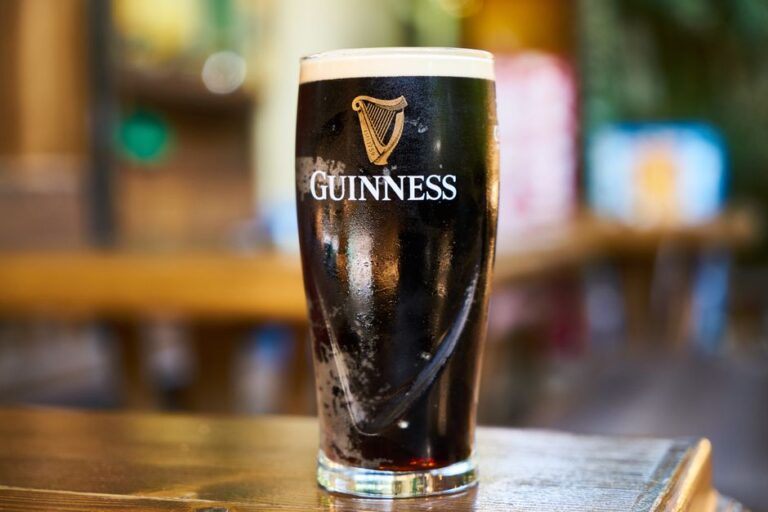
Dry Irish stouts like Guinness Draught (4.2% ABV) and Beamish Stout (4.2% ABV) emphasize clean roasted grain flavor with minimal sweetness and bitterness in the 30 to 45 IBU range. These beers create a crisp, drying finish. The traditional method of pouring these stouts through a nitrogen tap creates fine, creamy bubbles that enhance their smooth mouthfeel and visual presentation.
Oatmeal and Imperial Variants
Oatmeal stouts, typified by Samuel Smith’s Oatmeal Stout (5.0% ABV) from England, incorporate rolled oats into the grain bill, which add creaminess and subtle sweetness that balances the roasted grain character. The oats produce a silky mouthfeel and round out the sharper edges of pure roasted malts. Imperial stouts like Stone Russian Imperial Stout (9.6% ABV) take the style to extremes in alcohol and intensity, reaching 8 to 11% ABV and incorporating additional malts for sweetness and depth. These beers develop secondary flavors of plum, dark cherry, molasses, and bourbon notes if aged in wood, emerging over time as the beer matures.
Tasting and Serving Stout
Tasting a stout properly requires attention to temperature and presentation. Dry Irish stouts are best served at 42 to 50 degrees Fahrenheit, which preserves their crispness and showcases the nitrogen bubble structure. Higher-ABV stouts like imperial varieties benefit from warmer temperatures, around 55 degrees Fahrenheit, which allows complex flavors to emerge without alcohol harshness dominating.
On the nose, stouts present roasted grain and coffee aromas immediately, often with underlying chocolate or cocoa notes. Dry stouts emphasize the grain and coffee; creamier variants add chocolate and caramel. Flavor follows aroma but often develops secondary notes: a dry stout may show initial coffee then transition to bitter roasted grain with a crisp, drying finish. Oatmeal stouts display those roasted notes but round them with sweetness and creaminess. Imperial stouts layer roasted grain, chocolate, and fruit notes. Mouthfeel ranges from lean and crisp in dry Irish stouts to full and creamy in oatmeal varieties, with nitrogen carbonation creating a fine, persistent head that distinguishes these beers from standard CO2-carbonated styles.
Food and Beer Pairing
Stouts have a long tradition of food pairing, particularly with oysters, a pairing celebrated in Irish pubs where stout and oyster go together as a set meal. The dry, astringent finish of a stout cuts through the brininess and fat of oysters, creating balance. Beyond that classic combination, stouts work across a range of dishes: rich red meat like steak or lamb shoulder, chocolate-based desserts, hard cheeses like aged cheddar, and heavily spiced foods all complement stout.
Oatmeal stouts pair particularly well with roasted vegetables, nuts, and mushroom-based dishes where the creaminess of the beer echoes the earthiness of the food. Imperial stouts, with their higher alcohol and darker, more complex flavors, complement smoked and grilled meats, barbecue, and rich braises.
Brewing Stout at Home
Brewing stout at home follows the same general process as other beer styles but requires attention to grain selection and mash temperature. A basic dry stout recipe uses pale malt for the base, supplemented with chocolate malt and black patent malt, then fermented with an Irish ale yeast strain like Wyeast 1084 or White Labs WLP004. The key variable is roasted malt percentage, typically 10 to 20 percent of the total grain bill for dry stouts, and mash temperature, kept between 148 and 158 degrees Fahrenheit to preserve residual sweetness while maintaining adequate fermentability. The style’s endurance comes from its versatility: it works in both simple, dry expressions and complex, high-alcohol variants, appeals to drinkers seeking boldness and those wanting crisp refreshment, and serves equally well in formal tasting and casual pub settings.
Frequently Asked Questions
Why is Guinness so associated with stout?
Guinness has defined the dry Irish stout style since 1759 and remains the world's best-selling stout, making it the reference point for how most people understand the category.
What's the difference between a stout and a porter?
Stout historically evolved from porter as a stronger variation, but today both are dark beers. Stouts typically emphasize roasted malt intensity while porters tend toward balance and smoothness.
How should I serve a stout at home?
Dry Irish stouts taste best at 42–50 degrees Fahrenheit to preserve crispness; imperial stouts benefit from warmer temperatures around 55 degrees Fahrenheit to showcase complex flavors.
