
Key takeaways
- Dry stouts like Guinness cut through rich chocolate with roasted grain flavors, while imperial and barrel-aged stouts echo chocolate's depth and complexity.
- Dark chocolate above 70% cocoa requires full-bodied or high-ABV stouts to balance astringency; milk chocolate pairs better with naturally sweet or creamy stouts.
- Temperature matters: serve dry stouts at 50-55°F and allow chocolate desserts to warm slightly from refrigeration for better flavor interplay.
- Brewed-in stouts like Brooklyn Breakfast (with cacao and coffee) work best against desserts where cocoa isn't the main note, avoiding flavor redundancy.
Stout and chocolate are a natural pairing because both share roasted, cocoa-derived flavor compounds. The coffee and burnt-sugar notes in a stout echo the bitterness and depth of dark chocolate, creating a bridge that feels inevitable once you taste it. But getting the match right requires understanding what style of stout you’re choosing and what type of chocolate or dessert you’re serving.
Understanding Stout Beer Styles
Stout is a dark ale defined by roasted barley, which gives it its black color and characteristic coffee, cocoa, and ash-like aromas. The style originated in 18th-century London and later became famous in Dublin, where dry Irish stouts dominate. Beyond that foundation, stouts vary widely in alcohol content, sweetness, and flavor intensity.
Dry Irish Stout
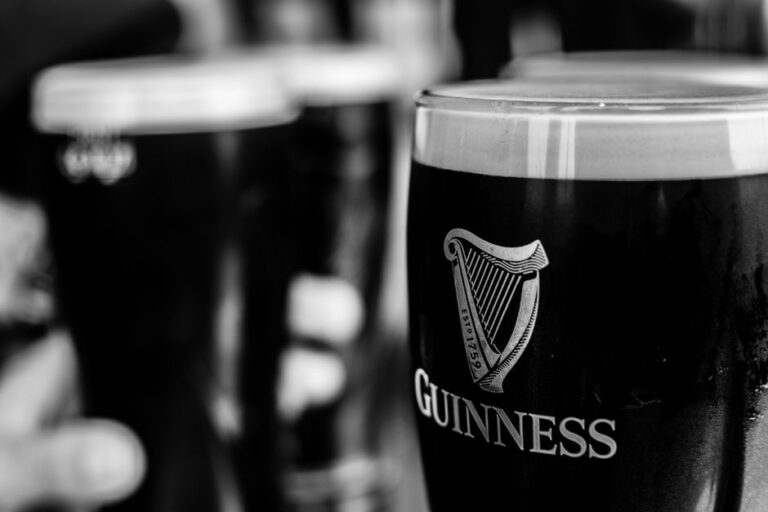
Guinness Draught, the category benchmark, sits at 4.2% ABV and 45 IBU with a thin white head, dry finish, and prominent burnt-grain flavors. The astringency comes from nitrogen gas (not carbonation) and unmalted roasted barley, which gives it a peppery, coffee-ground character that cuts through rich desserts rather than complementing them sweetly. A pint costs around $5-7 in bars across the US. Fuller’s London Black Cat (4.5% ABV) takes a different approach: it’s brewed in London but lacks the ashy quality of Irish stouts, instead offering caramel and cream notes that soften the roast.
Imperial and High-ABV Stouts
Imperial stouts were historically brewed in England for export to Russia and contained 7-10% ABV to survive the journey. Samuel Smith’s Imperial Stout (7.0% ABV) displays dried fruit, licorice, and molasses alongside the roasted base, while Stone Russian Imperial Stout (8.9% ABV) pushes toward chocolate and coffee liqueur territory. Barrel-aging adds another layer: New Holland’s Dragon’s Milk (9.2% ABV, aged in bourbon casks) introduces oak, vanilla, and whiskey notes that create entirely different pairing opportunities than a fresh stout.
Specialty Stouts
American breweries have developed stouts brewed with added ingredients. Brooklyn Brewery’s Breakfast Stout (9.0% ABV) incorporates coffee and chocolate, making it a dessert beer in its own right. Left Hand Brewing’s Milk Stout (6.0% ABV) uses lactose (unfermentable by yeast) to create a naturally sweet, creamy base. Ballast Point’s Xocoveza (6.7% ABV) includes cacao, coffee, and chile peppers, blurring the line between chocolate pairing and chocolate beer.
Chocolate Fundamentals for Pairing
Chocolate breaks into three main categories, each with distinct flavor profiles and tannin structures that interact differently with stout’s bitterness and mouthfeel.
Dark Chocolate (70% Cocoa and Higher)
Dark chocolate over 70% cocoa contains more cocoa solids and less sugar, creating astringency that mirrors stout’s roasted character. A Lindt Excellence 85% bar ($2-3 per bar) has sharp, mineral notes and lingering bitterness that demands a full-bodied stout like Samuel Smith’s Imperial or Stone Russian Imperial rather than a light Guinness. The cocoa’s natural tannins amplify perceived bitterness in the beer, so alcohol content matters: a high-ABV stout’s sweetness (from residual sugars or barrel aging) counterbalances the chocolate’s harshness.
Milk Chocolate
Milk chocolate (30-50% cocoa) is softer and sweeter, with vanilla and butterfat notes that clash with dry stouts. A dry Guinness will taste sharper and more astringent against a Ghirardelli milk chocolate square ($1.50 per bar). The pairing works only if the stout has inherent sweetness: Left Hand Milk Stout or a barrel-aged stout with caramel notes bridges the gap because the beer’s sweetness echoes the chocolate’s sugar content.
Single-Origin and Premium Chocolate
Specialty chocolatiers like Godiva and Lindt’s Lindor line ($20-30 per box of truffles) offer single-origin bars highlighting a specific cacao region’s flavor signature: Ecuadorian cacao tends toward fruity and floral, while West African cacao emphasizes earthiness and spice. Match the chocolate’s origin character to the stout’s secondary notes. A fruity Ecuadorian 72% bar pairs with an Imperial stout’s dried-fruit undertones better than with a purely coffee-focused dry stout.
Dessert-by-Dessert Pairing Guide
Chocolate Cake and Flourless Chocolate Cake
Chocolate cake made with moderate cocoa intensity (60-70% baking chocolate, not 85%+ bars) pairs with dry Irish stout because both have structure and slightly bitter finishes. Guinness Draught ($5-7 per pint) cuts through the richness without competing. Flourless chocolate cake, denser and more cocoa-forward, needs the roasted grain backup of a full-bodied American stout like Sierra Nevada Stout (6.0% ABV, $2.50-3.50 per bottle) or Great Lakes Edmund Fitzgerald (6.0% ABV, similarly priced).
Chocolate Mousse and Pudding
Mousse and pudding rely on air and creaminess rather than structural crumb, so they can go lighter or richer depending on cocoa content. A standard chocolate mousse (made with 65% chocolate) works with Left Hand Milk Stout because the beer’s creaminess (from lactose) mirrors the mousse’s texture, while its moderate alcohol and faint sweetness don’t overwhelm delicate custard flavors. For richer, darker mousse, Samuel Smith’s Imperial Stout provides cocoa-on-cocoa resonance without the dessert tasting thin.
Brownies, Truffles, and Molten Center Cakes
A fudgy brownie made with cocoa powder and melted 72% chocolate needs a full-bodied stout that can stand up to the cocoa intensity without being outmatched by sweetness. Imperial stouts aged in bourbon (New Holland Dragon’s Milk, around $18-22 per 750ml bottle) work because the whiskey notes and vanilla provide a contrasting sweetness that resonates with the brownie’s butter and sugar base. Truffles, especially dark chocolate ganache centers with cocoa dust, are bite-sized and intense, so sip a stout rather than gulp it, letting each taste linger. A molten chocolate cake with warm liquid center demands immediate pairing relief: the dry finish of Guinness cuts through the richness instantly, making it the classic choice for restaurant pairings.
Coffee and Chocolate Desserts
Tiramisu, coffee-flavored mousse, and chocolate-coffee cakes sit in a flavor overlap where both chocolate and coffee matter equally. Brooklyn Breakfast Stout, already brewed with coffee and cacao, creates a redundancy that can feel one-note; instead, choose an Imperial stout without added ingredients, like Samuel Smith’s, so the beer’s natural coffee character (from roasted barley, not brewing additions) plays off the dessert’s cocoa without turning the pairing into pure coffee.
Building a Stout and Chocolate Tasting
A structured tasting at home or a bar flight lets you compare how different stout styles interact with chocolate. Order or source three beers: a dry Irish stout (Guinness), an Imperial or high-ABV stout (Samuel Smith’s or Stone Russian Imperial), and a specialty stout (Brooklyn Breakfast or a barrel-aged option). Pair each with three chocolate forms: a 72% dark bar, a milk chocolate square, and one premium truffle or single-origin bar.
Taste the beer first, then a small piece of chocolate, then the beer again. Note how the chocolate’s sweetness or bitterness shifts the stout’s finish. A dry stout will taste drier after dark chocolate but softer after milk chocolate. An Imperial stout may reveal hidden fruit notes when followed by a fruity-toned origin chocolate. This tasting method reveals the interplay that a casual pairing might miss.
Temperature and Service
Stout’s flavor compounds open up at cooler temperatures but not ice-cold. Serve dry stouts like Guinness at 50-55°F to maintain the dry, peppery finish. Imperial and barrel-aged stouts benefit from 55-60°F, allowing caramel, oak, and alcohol warmth to express themselves. Chocolate desserts are ideally eaten at room temperature or slightly cooled, not straight from the refrigerator, because cold suppresses flavor. If serving stout and chocolate together, allow a few minutes for the dessert to reach 65-68°F while the beer warms slightly from its initial pour; the flavors will meet in the middle and interplay more clearly.
Frequently Asked Questions
Can I pair light stout like Guinness with dark chocolate?
Yes, but only with moderate cocoa content (60-70%). Very dark chocolate (85%+) becomes sharper against dry stouts; pair those instead with full-bodied imperials or barrel-aged stouts.
Why does stout's flavor change after tasting chocolate?
Chocolate's sweetness or bitterness shifts how your palate perceives the beer's finish. Dark chocolate makes dry stouts taste drier and more peppery, while milk chocolate softens the beer's edges.
Is barrel-aged stout better than fresh stout for chocolate pairing?
Neither is universally better. Barrel-aged stouts add oak, vanilla, and whiskey notes for different pairings than fresh stouts. Choose based on dessert: molten chocolate cake suits dry fresh stout, while brownies pair better with bourbon-barrel aged options.
